In-clinic and at-home teeth whitening: how they differ
Whitening should start with a dental examination. How in-clinic and at-home whitening differ, why tray fit matters, and the questions to ask the dentist about sensitivity and existing crowns, veneers or fillings.
Author: CNR AestheticsPublished 5 min read
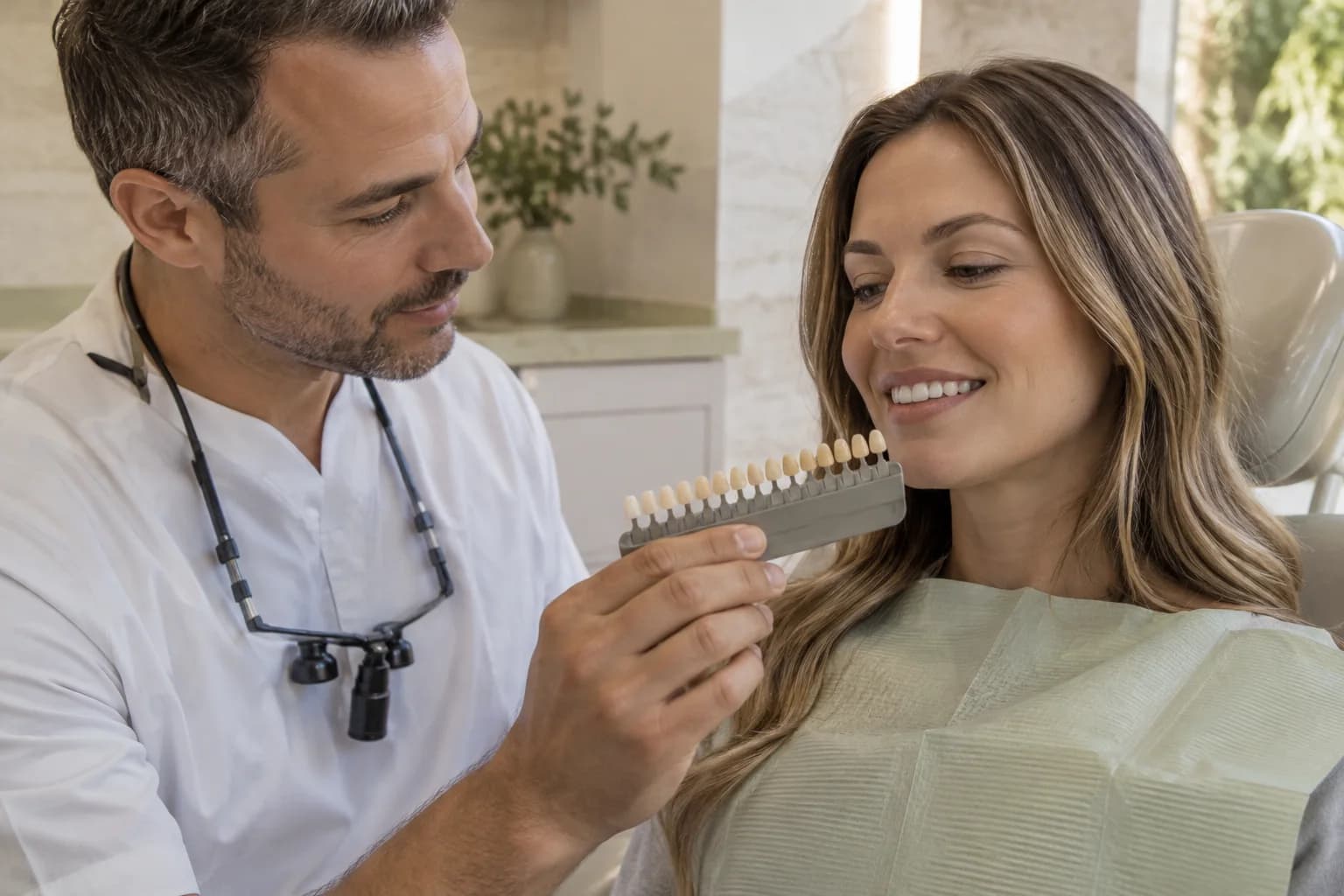
Teeth whitening, whether in the clinic or at home, should start with a dental examination. A dentist checks for decay, gum problems, worn enamel or existing sensitivity, and looks at any crowns, veneers or fillings, which whitening gels do not lighten. From there, in-clinic whitening means the dentist applies a whitening gel in the surgery with the gums protected, while at-home whitening means you wear custom-made trays with a gel supplied and supervised by the dentist.
This guide explains the difference and the questions to ask, particularly about tray fit and sensitivity. It is not dental advice. We coordinate appointments with independent partner clinics in Istanbul; the examination and the choice of approach belong to the dentist.
Why the examination comes first
Whitening gels work on natural tooth enamel and the layer beneath it. If there is decay that needs attention, a cracked tooth, receding gums or exposed root surfaces, the gel can cause discomfort or simply be the wrong first step. The examination also helps explain the cause of discolouration. Surface staining from coffee, tea or smoking may respond to a professional clean, while discolouration from within the tooth behaves differently.
Existing restorations matter too. Crowns, veneers, bonding and fillings keep their colour, so whitening natural teeth around them can leave a visible mismatch. A dentist can explain whether any restorations might need attention afterwards and what that would involve.
How in-clinic whitening works
In the surgery, the dentist or a dental professional working under their supervision protects the gums and soft tissues with a barrier, then applies a peroxide-based whitening gel to the teeth. Some systems also use a light. The gel is usually applied in a series of rounds within one appointment, and the dentist monitors the teeth and gums throughout. Because it takes place within a visit, it is often discussed by people who have limited time in Istanbul.
How at-home whitening works
For at-home whitening, the dentist takes impressions or a digital scan of your teeth and has custom trays made to fit them. You then place a small amount of whitening gel, supplied by the dentist, into the trays and wear them for the periods the dentist sets. Change tends to be gradual, and the dentist can adjust the plan if sensitivity appears. Some people use at-home trays after an in-clinic session to continue or maintain the shade, on the dentist's advice.
For visitors, the practical question is timing: trays need to be made and fitted before you leave, and the dentist will want to check the fit and show you how to use them. Shop-bought kits with generic trays are a different thing, and a dentist can explain why they may not suit your teeth.
Tray fit and sensitivity
A well-fitting tray keeps the gel on the teeth and away from the gums. A tray that is loose or overfilled can let gel reach the gums and cause irritation. Sensitivity during or after whitening is a commonly reported effect, and gum irritation can also occur. These are worth discussing before you start:
Do I already have sensitive teeth, and how might whitening affect that?
Will you check the tray fit before I leave Istanbul, and what should I do if it rubs or feels loose at home?
How much gel should go in each tray, and how should excess be removed?
If sensitivity appears, should I pause, shorten wear time or use a desensitising toothpaste?
Who can I contact with questions once I am home?
Other questions to ask the dentist
Beyond fit and sensitivity, you may want to ask:
What is causing my discolouration, and is whitening the right first step, or would a professional clean come first?
Which whitening product is used, and can its name be written down?
How will my crowns, veneers or fillings look next to whitened teeth?
Which foods, drinks or habits should I limit afterwards, and for how long in my case?
Are there reasons whitening may not be advisable for me, such as pregnancy, gum disease or age?
The shade that can be reached varies from person to person, and teeth can pick up staining again over time, so be cautious of a promise of a particular shade.
Planning whitening around a trip
If you are combining whitening with other dental visits, such as a professional clean, the order matters, and the dentist will advise on it. In-clinic whitening fits within an appointment, but sensitivity can follow, so it may be worth avoiding a long day of hot and cold food and drink straight afterwards. At-home whitening needs a fitting appointment before you leave and clear written instructions for continuing at home. Either way, keep a note of the product used and the dentist's instructions.
Do I need a dental examination before whitening?
Yes. A dentist should check for decay, gum problems, sensitivity and existing restorations first, and explain what is causing the discolouration.
Will whitening change the colour of my crowns or veneers?
No. Whitening gels act on natural teeth, not on crowns, veneers or fillings. Ask the dentist how these will look next to whitened teeth before you start.
Is sensitivity normal after whitening?
Sensitivity is a commonly reported effect. The dentist can explain what to expect and how to manage it, for example by adjusting how the gel is used.
Can I take at-home trays with me when I fly home?
That is the usual idea, but the trays need to be made and fitted before you leave. Ask the dentist to check the fit and give you written instructions.
Which option should I choose?
It depends on your teeth, any sensitivity, your restorations and your time in Istanbul. The dentist will explain which approach, if any, suits you.
If you would like help arranging a dental examination and whitening consultation in Istanbul, message our coordinators on WhatsApp or through the contact form. We organise the appointments and timing; the examination, the choice of approach and the advice come from the dentist.
General information
This guide is general information and not medical advice. Your providing clinician will give you instructions for your procedure.
Related procedure
Teeth Whitening
Teeth whitening is a dental procedure that aims to lighten selected discoloration on natural teeth using peroxide-containing products. Whether the staining is external or linked to the internal structure of the tooth affects the method. The dentist checks decay, cracks, gum health, sensitivity and existing fillings, crowns or implants, and explains clinic or controlled home options.