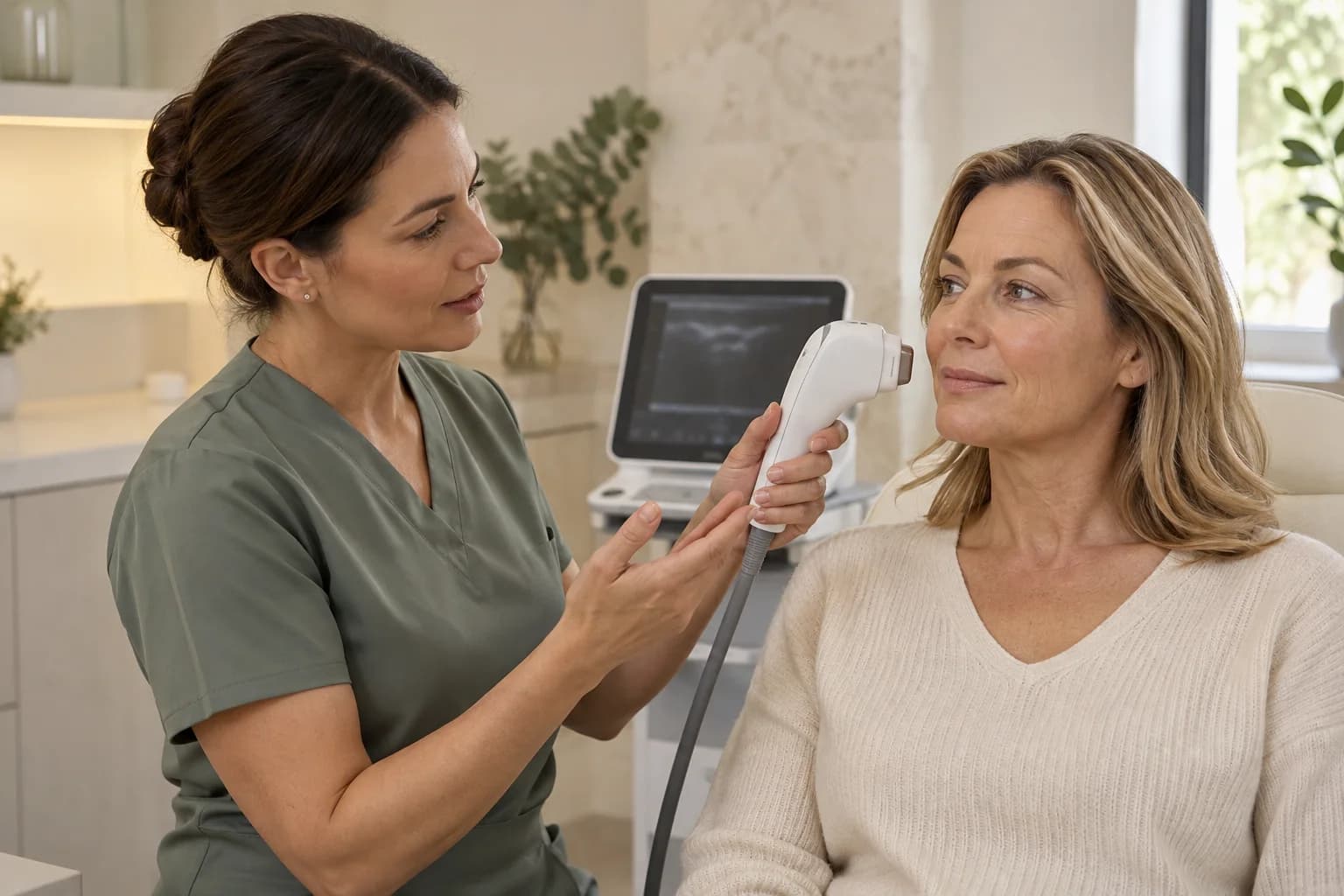
After you return home: follow-up and warning signs
What to carry home after an aesthetic procedure in Istanbul, how non-urgent follow-up questions reach the partner clinic through our coordinators, and the warning signs that mean you should seek urgent care locally.
Author: CNR AestheticsPublished 6 min read

When you return home after an aesthetic procedure in Istanbul, three things help: a written record of exactly what was done, a clear route for follow-up questions to the clinic that carried out the procedure, and knowing which signs mean you should seek medical care locally rather than wait for a reply. Some symptoms cannot wait for a message to be answered across time zones, and recognising them matters more than any follow-up arrangement.
We are a coordination service, not a clinic. We can pass your questions to the partner clinic and help you get answers, but we cannot assess you, and we do not offer remote reviews ourselves. Any clinical opinion comes from the clinician who carried out the procedure or from a health professional who sees you in person.
Records to carry home
Before you leave the clinic, ask for a written record and keep it somewhere you can find it quickly, on paper and as a photo on your phone. It should include:
the name of the clinic and its contact details
the full name and professional title of the clinician who carried out the procedure
the date, the procedure and the areas addressed
the product or device by name, with the batch or lot number and, where available, the product sticker from the packaging
the quantity used, where relevant, and any medicines given or prescribed
the written plan and aftercare instructions, in a language you read comfortably
If you ever need care at home, a local doctor can act more quickly with the product name and batch number than with a description. The same record is useful for anyone who carries out a future procedure for you.
How follow-up questions are routed
For questions that are not urgent, such as whether a mild reaction is expected or how to follow an aftercare step, you can message our coordinators. We pass the question, and any photos you choose to share, to the partner clinic, and relay the clinic's reply to you. The answer comes from the clinic, not from us.
A few points to keep in mind:
Response times depend on the clinic and on time differences, so this route is for questions that can wait.
Photos can help the clinic understand a question, but they are not an examination, and the clinic may advise you to be seen in person locally.
Whether the clinic offers any form of review after you have left is something to ask before the procedure, not after.
Include your record details, the date and a short description of what you have noticed when you write.
Warning signs that need urgent local care
Some symptoms should not wait for a reply from Istanbul. Seek urgent medical care where you are, through your local emergency number or an emergency department, if you notice any of the following:
difficulty breathing or swallowing, swelling of the lips, tongue or throat, or a widespread rash, which can be signs of a serious allergic reaction
after filler, increasing pain, skin that turns pale, dusky or mottled near the injection area, or any change in vision
after botulinum toxin, difficulty swallowing, speaking or breathing, double or blurred vision, or weakness spreading beyond the area injected
spreading redness, heat, increasing swelling, discharge or fever, which can suggest infection
blistering, open wounds or severe pain after a laser, peel or energy-based procedure
This is not a complete list. If something feels seriously wrong, seek care first and contact the clinic afterwards. Take your written record with you, and tell the clinician that you had a procedure abroad, when, and with which product.
Symptoms to raise with a local doctor
Other changes are less urgent but still worth having checked in person, rather than relying on messages alone. Examples include a lump that is becoming more noticeable or tender, asymmetry that is changing rather than settling, persistent bruising or swelling beyond what you were told to expect, a thread that can be seen or felt through the skin, or tooth sensitivity after whitening that does not ease. A general practitioner, dentist or local aesthetic clinician can examine you, and you can share their findings with the clinic through us if you wish.
Before you fly: questions to ask the clinic
Follow-up works better when it is agreed before you leave. Questions worth asking at the clinic:
Which reactions do you consider expected after this procedure, and which would you want to hear about?
Does the clinic offer any review once I am home, and in what form?
If I need to be seen locally, is there information you would want my doctor to have?
Is any further session part of the plan, and what happens if I cannot return?
Can you review my results remotely?
No. We are a coordination service and do not assess patients. We can pass your question and photos to the partner clinic, and any opinion comes from the clinic or from a health professional who sees you in person.
What should I do if I think something is seriously wrong?
Seek urgent medical care where you are first, using your local emergency number or an emergency department. Contact the clinic through us afterwards, and take your written record with you.
Why does the batch number matter?
It identifies the exact product used. A doctor at home can use it, together with the product name, to understand what was injected, and it can matter if a product issue is ever reported.
Will a doctor at home see me if the procedure was done abroad?
Emergency services are there for urgent symptoms, whatever their cause. For non-urgent concerns, arrangements vary by country and provider, so it is worth checking what is available to you before you travel.
If you would like to arrange a consultation and understand how follow-up questions would be handled, message our coordinators on WhatsApp or through the contact form before you book. We will explain how we route questions to the partner clinic; clinical advice always comes from the clinic or a health professional who sees you.
General information
This guide is general information and not medical advice. Your providing clinician will give you instructions for your procedure.
Related procedure
Botulinum Toxin
Botulinum toxin is used to soften movement-related lines on the forehead, between the eyebrows and around the eyes. Your needs, medical history and suitability are reviewed individually before any plan is agreed. Masseter, gummy smile, lip flip, chin and sweating are assessed separately, because the dose, anatomy and risk profile differ for each purpose.